

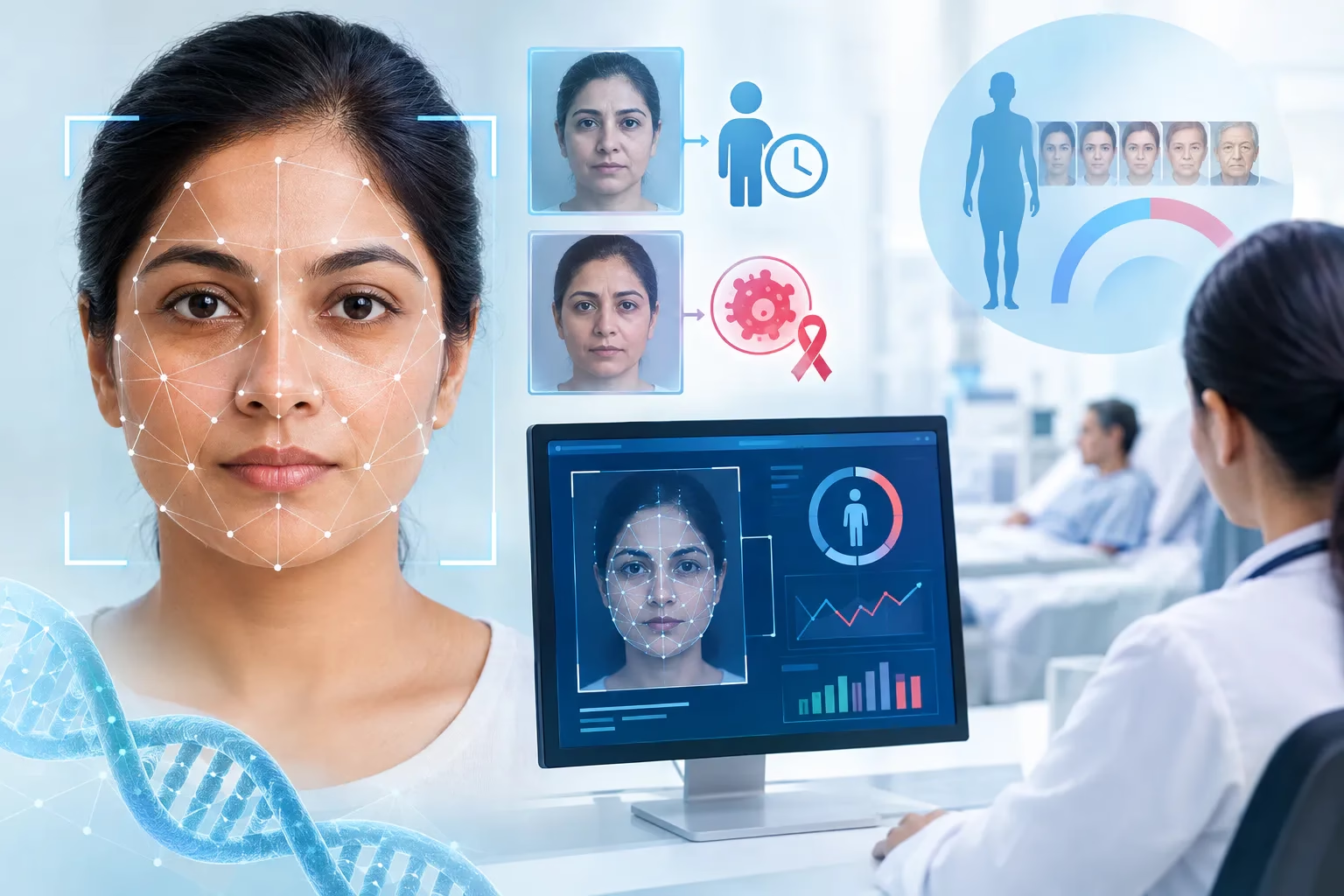
Researchers have engineered an advanced artificial intelligence system that examines facial photographs to calculate biological age and forecast mortality risks among cancer patients, offering a revolutionary non-invasive diagnostic helper for clinical teams.
Key Highlights & Background
- FAHR-Face Model: Trained initially on over 40 million facial images to evaluate biological aging and health outcomes.
- High Risk Correlation: Cancer patients categorized in top-risk tiers showed a mortality risk over three times higher.
- Global Evaluation: Tested across thousands of patients in US Harvard-affiliated medical centers and the Netherlands.
- Expert Caution: Indian oncology specialists stress the critical need for regional validation to account for diverse demographics.
Comprehensive Details & Analysis
A pioneering breakthrough in medical technology has emerged with the creation of artificial intelligence tools designed to read human facial features for health insights. Published in a prominent medical journal, this cutting-edge approach utilizes the FAHR-Face and FAHR-FaceSurvival algorithms to gauge how fast a person is aging biologically relative to their actual years on earth. By processing millions of reference images, the deep-learning model can spot subtle structural and textural facial cues tied directly to long-term vitality and illness vulnerability.
Clinical testing involving tens of thousands of cancer patients revealed that individuals whose faces reflected an accelerated biological age faced severely compromised survival rates. When combined, the dual models synthesized vital prognostic details that outperformed single-variable assessments. However, leading medical professionals caution that while the technology presents immense promise for precision oncology, rigorous testing on diverse international populations remains a prerequisite before clinical adoption.
Industry Impact & What Happens Next
As digital health tools rapidly infiltrate oncology departments worldwide, this facial analysis model could redefine how clinicians screen for recurrence risks and personalize treatment pathways. Moving forward, developers and medical researchers must focus on expanding clinical trials across heterogeneous populations, particularly in regions like South Asia, to ensure unbiased accuracy and seamless integration alongside genomic testing.


