

In a landmark epidemiological revelation that fundamentally challenges India's conventional nutritional interventions, a comprehensive nationwide survey conducted by the Indian Council of Medical Research (ICMR) has found that more than half of women of reproductive age suffer from anaemia, while nearly two-thirds of Indian adolescents endure severe Vitamin B12 deficiency. The findings dismantle the long-held assumption that widespread anaemia in the subcontinent is solely a byproduct of iron deficiency, calling for an urgent paradigm shift toward multi-nutrient strategies and targeted clinical screening.
The SAMPADA Survey: Unmasking a Dual Micronutrient Crisis
Conducted by the ICMR’s National Institute of Nutrition (NIN), the SAMPADA survey (2023–2025) represents one of the largest and most technically rigorous nutritional assessments ever executed in South Asia. Covering more than 200,000 individuals across 183 districts in 35 states and Union Territories, the research team examined over 81,000 households and processed more than 170,000 venous blood samples.
The survey critically resolves a glaring data gap created when the preliminary fact sheets of the National Family Health Survey (NFHS-6) bypassed anaemia metrics to await precise, venous-drawn biochemical validation. The resulting dataset paints a sobering picture of chronic micronutrient deprivation across demographic lines, cutting across rural and urban divides.
Key Findings from the ICMR-NIN SAMPADA Dataset:
- 55.9% of non-pregnant, non-lactating women aged 15–49 years are clinically anaemic.
- 46.3% of adolescent girls and 22.8% of adolescent boys exhibit sub-optimal haemoglobin levels.
- Lactating mothers (58.1%) and pregnant women (43.6%) remain heavily burdened by anaemia.
- 66.1% of adolescent boys and 65.4% of adolescent girls suffer from acute Vitamin B12 deficiency.
- Over 57% of adult women and 60.4% of adult men fall below standard Vitamin B12 thresholds.
- Iron deficiency accompanied anaemia in only 27% of anaemic adolescent girls and reproductive-age women.
The Diagnostic Myth: Why Iron Is Not the Sole Culprit
For decades, India's public health apparatus—most visibly through the ambitious Anaemia Mukt Bharat campaign—has operated on the presumption that nutritional anaemia is predominantly microcytic, driven primarily by dietary iron deficits. Consequently, programmatic interventions have leaned overwhelmingly on mass Iron and Folic Acid (IFA) supplementation.
However, the SAMPADA findings upend this monolithic framework. The data proves that iron deficiency accounts for anaemia in barely a quarter (27%) of afflicted adolescent girls and reproductive-age women. While standalone iron deficiency was detected in 36.3% of adolescent girls, 34.1% of women, and 23% of young children, millions of individuals with severe anaemia show entirely normal serum ferritin and iron markers.
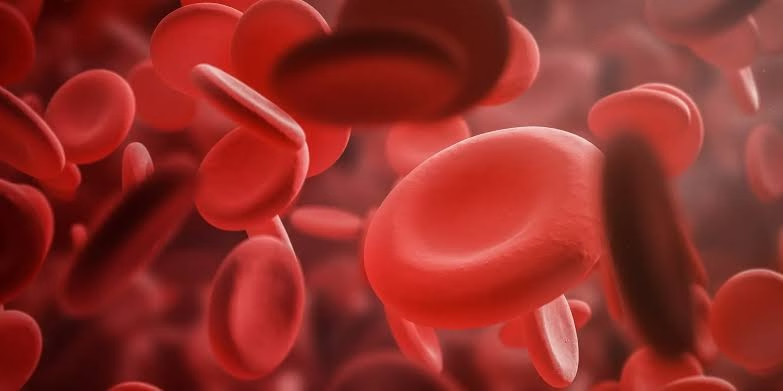
This diagnostic disconnect highlights the critical role of Vitamin B12 (cobalamin). Essential for erythrocyte maturation and DNA synthesis, Vitamin B12 deficiency leads to megaloblastic anaemia, characterized by enlarged, structurally fragile red blood cells that fail to transport oxygen efficiently. When B12 levels plummet across two-thirds of the youth population, conventional iron tablets fail to restore normal hematologic profiles.
Expert Perspectives: Moving Beyond Blanket Supplementation
Clinical haematologists emphasize that treating undifferentiated anaemia with unguided iron distribution is not just ineffective, but potentially detrimental for non-iron-deficient phenotypes.
"Anaemia is a complex clinical manifestation, not a single disease entity. It can stem from inherited red blood cell disorders like thalassaemia and sickle cell trait, bone marrow failures such as aplastic anaemia, or secondary inflammatory states linked to chronic kidney disease, tuberculosis, and occult malignancies. Blanket iron supplementation provides no therapeutic benefit in these pathologies and can cause organ-damaging iron overload."
— Dr. Tulika Seth, Professor of Haematology, All India Institute of Medical Sciences (AIIMS), New Delhi
Dr. Seth confirmed that medical experts are actively collaborating with the Union Health Ministry under the Anaemia Mukt Bharat umbrella to formulate intuitive, community-level clinical algorithms. These diagnostic trees will help primary health workers segregate nutritional deficiencies from haemoglobinopathies and systemic chronic ailments before prescribing intervention courses.
Dietary Architecture and Societal Implications
The explosive rate of Vitamin B12 deficiency—touching 63.1% in pregnant women and over 60% in working-age men—exposes profound dietary imbalances. Unlike iron, which can be acquired through plant-based foods such as leafy greens, legumes, and jaggery, bioactive Vitamin B12 is synthesized exclusively by micro-organisms and naturally found only in animal-derived products, dairy, and fermented foods.
In a largely vegetarian or plant-predominant dietary landscape, where dairy intake is frequently constrained by household economics or processing losses, B12 intake remains chronically deficient. When adolescents experience rapid growth spurts without adequate B12, the deficiency manifests as chronic fatigue, impaired cognitive performance, reduced academic engagement, and neurological deficits.
Practical Steps for Individuals and Families
- Diversify Diets: Incorporate regular servings of curd, paneer, and fortified milk, or eggs and poultry where culturally accepted.
- Demand Venous Screening: Request complete blood counts (CBC) with peripheral blood smear and serum B12 assays during routine checkups, rather than relying solely on finger-prick haemoglobinometers.
- Targeted Supplementation: Individuals following strict vegan or dairy-restricted diets should proactively discuss oral or sublingual methylcobalamin supplementation with their physicians.
Future Outlook: Redesigning India's Public Health Armoury
The SAMPADA findings herald an unavoidable turning point for Indian healthcare planners. The government's extensive staple food fortification programs, which have primarily focused on iron-fortified rice, must now re-examine bioavailability, gut absorption dynamics, and the co-fortification of Vitamin B12 and folate.
As India seeks to harness its demographic dividend, leaving two out of three adolescents micronutrient-compromised risks long-term national productivity and maternal health outcomes. The ICMR survey makes one mandate clear: defeating anaemia will require sophisticated diagnostics, multi-nutrient food matrices, and an end to one-size-fits-all pharmacology.
Frequently Asked Questions
Why does Vitamin B12 deficiency cause anaemia if someone has enough iron?
Iron forms the core of the haemoglobin molecule, but Vitamin B12 is vital for red blood cell replication and genetic synthesis inside bone marrow. Without sufficient B12, red blood cells become oversized, abnormal (megaloblasts), and degrade prematurely before entering circulation, causing anaemia even when iron stores are normal.
Why is the SAMPADA survey considered more accurate than previous reports?
Previous broad surveys often utilized capillary blood sampling (finger-prick tests), which can introduce dilution artifacts and overestimate anaemia levels. SAMPADA relied on high-precision venous blood draws and laboratory-grade automated haematology analyzers across more than 170,000 biological samples nationwide.
Can iron supplements be harmful if anaemia is caused by something else?
Yes. In individuals suffering from haemoglobinopathies like thalassaemia trait, sickle cell disorders, or anaemia of chronic inflammation, taking unnecessary high-dose iron supplements can lead to iron accumulation in vital organs such as the liver and heart, causing secondary toxicity.


